
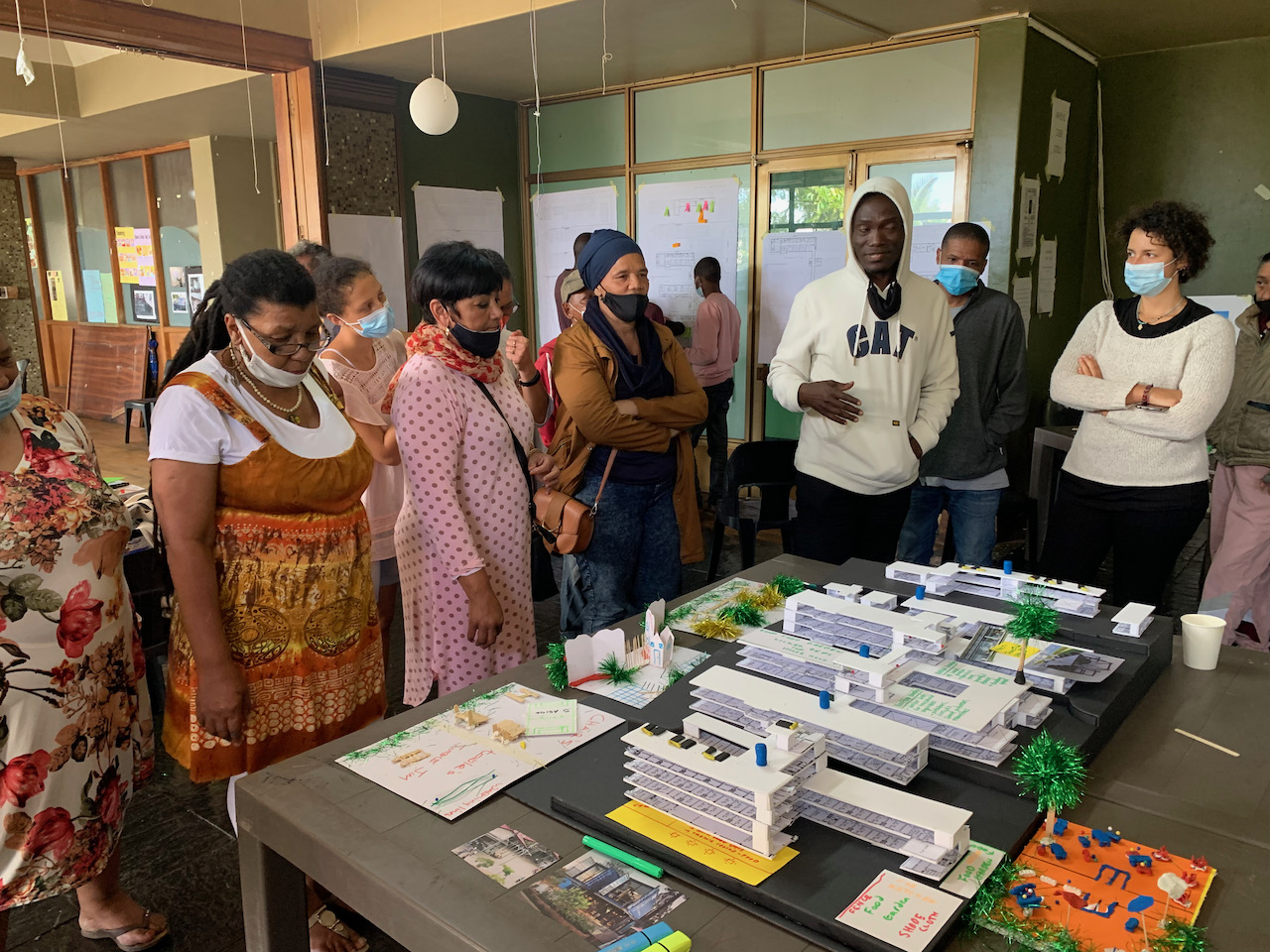
The Cape Town Commoners project, drawing on the ideas and concepts developed by Elinor Ostrom and others, aims to create a framework for connecting activists, social movements, and organizations in Cape Town. This approach works towards common goals and can be a method to leverage the community’s strengths and resources to address social and environmental issues, creating a more sustainable and equitable future.
Our primary activity involves supporting the self-organization process at Cissie Gool House.
In the diverse urban landscape of Woodstock, Cape Town, Cissie Gool House stands as a symbol of resilience and communal solidarity. This building, once a public hospital symbolizing healthcare provision, has been reborn as a beacon of hope for those marginalized by the relentless tide of urban gentrification.
Cissie Gool House’s journey began in 2017 when the Reclaim the City movement, asserting housing rights, occupied the derelict structure. This action was more than a protest; it was the foundation of a new community ethos, advocating for an equitable Cape Town where all its citizens have a place. The once vacant hospital, echoing its past of care and healing, was revitalized by individuals and families seeking refuge from eviction or displacement due to soaring property costs.
We perceive Cissie Gool House as a commons, inspired by the work of Helfrich and Bollier (2019), authors of Free, Fair and Alive: The Insurgent Power of the Commons.
Silke Helfrich‘s visit to Cape Town in 2019, including her attendance at various events at Cissie Gool House, initiated the co-design process, supported by the Heinrich Böll Foundation.