
The Value of Co-design in the Worker Economy
By Bevil Lucas
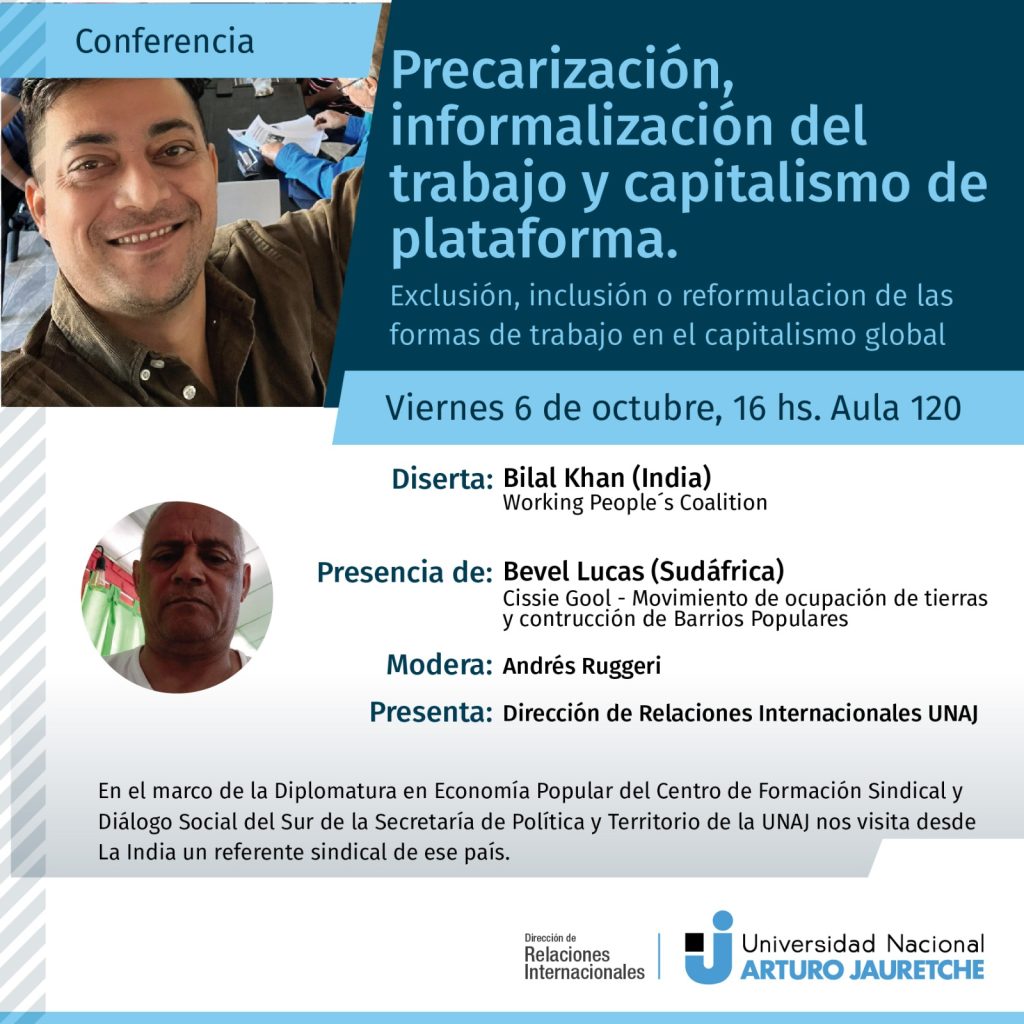
This presentation and contribution focuses on the developments at the Cissie Gool House occupation that have been initiated through the process of co-design. Co-design is about collaborative learning and participatory decision making with the participants. The process aligns with approaches relevant to the role of worker education from activist and community -led perspectives. It reflects on these developments and the impact on the living environment at Cissie Gool House (CGH). The conversations within, and arising from, the co-design workshops are at the heart of this presentation and includes four aspects relevant to the principles of popular education. This presentation is the collective work of all involved in the project and continues to make valuable contributions to the community. Our effort builds on existing initiatives in housing/land struggles in which we have worked collaboratively in Cape Town, and with links to other cities in South Africa (Durban, Johannesburg, Tshwane) as well as links to Latin America (Brazil and Columbia) and Europe( Barcelona).
Deepening Understanding of community struggles within the global south
The first co-design process commenced in 2020 where occupants decided that CGH is a place of homecoming, self -learning, collective-care, sufficiency and solidarity. It became a motivation to reclaim the purpose of place and take action through meaningful dialogue. It deepened the interest and involvement of the internal working committees and external support groups to pave the way forward through activities that continue to sustain our collective decision – making. The value of co-design deepens understanding of occupations as practices of urban transgression and (re-)design, suggesting that these are sites of both immediate struggle and possibility. Our project will break ground by bringing scholars, social movements, and legal and advocacy-based organizations interested in urban housing and occupations into a collaborative engagement. We consider how occupations can be recognised not merely as expressions of housing injustice but rather as integral features of urban landscapes that indicate trans-formative possibilities for re-imagining and redesigning cities in more democratic and participatory ways.
For many urban residents, city-life is marked by a profound precarity as they struggle to access housing and infrastructure in the context of extreme poverty and inequality. Occupied in 2017, by the housing justice movement Reclaim the City, this action emerged in the context of gentrification and a housing affordability crisis and has since been repurposed into a home by the community of Cissie Gool House.
The changing role of leadership
The co-design process involved an openness in leadership to also be learners in knowledge sharing as well as knowledge production. This requires solutions that differ from the past. One example of this shift is an awareness in the growing involvement of youth in the struggles at CGH and also through their own approaches to youth empowerment. Another change was to expand the internal working group set up by the community to include its external partners. This process enabled the leadership to expand its role to address other technical challenges from a position of self management, self sufficiency and care.
Sustaining a progressive stance in the production of knowledge
The first co-design exhibition was launched at Cissie Gool House in December 2022. It reflected the participatory process to date and was attended by a hundred visitors from community activist organizations, and progressive education networks in solidarity with CGH. Further discussions followed from the different sections at CGH in response to the exhibition and especially on the future of Cissie Gool House in the making of a home. The exhibition ran from this year in the City centre, making it the first public engagement on the co-design process. The exhibition also includes the experiences in Bogota and Sao Paolo. The occupation of land and buildings is a form of practice and tactic of survival. Urban housing occupations can be conceived as redesigning a space by marginalized urban residents, often carried out without the consent of the property-owner, and emerging as a necessary and immediate response to housing risks being experienced. Whilst we do not wish to romanticize occupations, we are interested in the ways that these may function as speculative projects – intervening into the present and potentially remaking urban futures. As an act of reconstructing dignity and remaking urban citizenship, brick by brick.
The co-design process enables us to ultimately establish a platform to document occupational practices and possibilities, with a view to supporting the labour of building alternative futures.
Towards an empowered and transformative agenda for a just housing solution
The co-design process included a progressive response from the community to the Heritage Impact Assessment of the premises. The response reflected on the need for community – cultural planning of cities due to the lack of political commitment to address the injustice of spatial apartheid in Cape Town. Cissie Gool House in its support for a social solidarity economy has included opportunities for a worker economy at the occupation. The garden project, self -employment opportunities , self -management of the occupation, and the leadership role of women and youth are some of the contexts for implementation at Cissie Gool House. Our approach is guided by principles of empowerment and trans-formative models to ensure effective service delivery for the community by the local municipality. For many cities, difficulties in providing adequate housing and infrastructure in the context of extreme poverty and inequality continue to shape citizen’s living conditions and opportunities in profound ways.
Key learnings from workshop sessions and dialogue
The co-design process instilled greater confidence to present, participate and meaningfully engage about a sustainable, self – organized living at CGH. The workshops opened up opportunities for the youth to get involved and the CGH leadership to become more proactive. 80 % of the leadership attended the final workshop. The Co-Design workshops have created guidelines for historical intangible heritage at the site. The process also produced a draft vision and mission statements as a work in progress. The co-design exhibition was well received and attended. The exhibition is scheduled to travel to other communities and cities in South Africa and include participation from cities in the gobal south.
The following key learnings emerged from the workshops.
Workshop1: What works, what does not work and what can work better
* skills to resist constant intimidation and the threat of evictions
* support from the broader occupation movement
* we put in place an effective, disciplined, dedicated and committed leadership team
* a culture and practice of democratic accountability
* responsibility to manage conflict
* acknowledging room for improvement and risk management
Workshop 2: Visioning: The changed environment in which CGH finds itself
* understanding the roles and responsibilities of the forthcoming management agency
* strategies for mitigation and a memorandum of understanding with the management agency, for example, threat of fire/ uncertainty of Covid 19 infections
*impact of income levels and on affordability to access social housing
* Strengths Weaknesses, Oportunities Threats (SWOT) analysis and action planning skills
Workshop 3: Informing a vision and mission for the occupation
* the purpose of vision and mission statements in the sustainable development of the
occupation
* the range of housing options
* the values of participatory decision making
Workshop 4: Stories, histories, memories for reshaping CGH
* understanding the tangible and intangible histories and heritage of the building and Woodstock community
* documenting the social histories and personal stories of occupants, for example, CGH Zine, Cities Occupied documentary, media interest, use of theatre of the oppressed methodology, international visitors
* documenting experiences of all occupations in the city
* CGH response to heritage impact assessment
Workshop 5: Infrastructure, and maintenance challenges and walkabout
* needs analysis of maintenance and infrastructure in the occupation with the occupiers
* implementation plan for cost, maintenance and repairs
* values and skills for self management, self sufficiency and care
Workshop 6: Q&A session on various state housing instruments
* learnings about different housing typologies e.g. transitional housing
* accessibility and affordability
.* ownership
* social housing management capacity e.g. cooperatives, trusts
Workshop 7: Co-design of units with shared facilities
* floor design of each section in the occupation, focusing on practical solutions to maintenance
* the cgh table top model for re-imagining the future of the occupational
* cost and design considerations for each section in the buildings
* identifying cgh as a community place making experience: economic spaces, recreational spaces, garden spaces, working spaces ) for example, food production), meetings and events spaces, children’s library, creative writing sessions, film screenings
Co-design Exhibition
The exhibition, in its second run, succeeded in bringing its story of struggle and resilience to a public exhibition space and revealed new possibilities of making exhibitions an enlivening experience. The inclusion of audio -visual recordings complemented the power of the narrative and gave the event an added appeal, especially to those audiences accustomed to conventional exhibitions. The public conversations arising out of the presentations and talks were in keeping with the participatory nature of co-design decision -making
Coordination Team
The exhibition was co-coordinated by the CGH working group which includes the support organizations and projects.
Co-design Working group: the group is lead by architect, Malcolm Campbell, and includes an internal group of CGH residents, with external participation from Andrea Couvert ( Woodstock Resident Association, Cape Town Commoners Project) Naren Sewpaul (the Cape Town Commoners Project), Robyn Park-Ross (Ndifuna Ukwazi), and various research students involved in the CGH activities.
CGH Leadership group: the leadership is made up of 12 CGH residents and includes representatives elected from each of the living sections.
CGH Monitors groups are nominated from each Section level to update leadership on progress.
CGH Support group representative from all organisations and institution that support the Co-design process in CGH
The Cape Town Commoners Team: coordinates the co-design process and meets once a week. The team also consults with Karen (CGH Leader), Robyn (UN) or Malcolm (Architect).
Ndifuna Ukwazi (NU): is an activist organisation and law centre that advocates for access to well-located land and affordable housing for poor and working class families, communities and social movements.
Socio-Economic Rights Institute of South Africa (SERI) is the organisation that offers legal support to CGH
The International Labour Research and Information Group (ILRIG): is a support organisation dedicated to research, education, training, the production of popular materials, and the provision of reflective spaces for working class movements in South and Southern Africa
City Occupied Project – UCT – Environmental & Geographical Science is led by Suraya Scheba, a lecturer interested in urban socio-material struggles and emancipatory futures, and has explored this through a focus on the politics and struggles over water and housing infrastructure research across cities of the Global South.
Tshwane Leadership Foundation: is an inner city community organisation committed to socially inclusive urban transformation and is led by Stephan der Beer.
DVV International – South Africa: DVV International uses the “Popular Education” approach in working with women and youth in order to assist them in the development of their communities.
Cape Institute for Architecture: CIFA is the largest regional architecture body in South Africa. The institute is committed to driving innovation and integrity within the profession and is one of the host organizations for the CGH Co-Design Exhibition.
The response to the exhibition
The CGH Co-design exhibition is unique because it has emerged from a co-design process which has been empowering for CGH residents and the external participants in the working group. Co-design is about making decisions, and it involves seeing marginalized people as resilient, creative and capable. In a co-design process, people are motivated to slow down, listen, learn together and apply evidence that works. It is not about having workshops to ask people’s opinions and excluding them from critical decision making.
Dialogue Sessions
The first session was the City Occupied Dialogue. The dialogue included presentation:
- Mapping of Cape Town city occupations (by Jinty Jackson)
- Comparison to inner city occupations and tenure security in Sao Paulo Brazil (by Kezia Fortuin), and CGH external and internal pressures and impacts on health and wellbeing of residents (by Naeemah Sadien).
The most significant comments from the discussion were about health, housing, and personal and community well-being.
The second session – Social Housing For Whom, How and Where – focused on integrating social housing and fostering community through active participation.
The key speaker was Stephan De Beer from Yeast City Company, the first Social Housing company in the City of Tshwane and one of the first in South Africa.
The following points were covered in the presentation:
- the need for re-framing the housing policy in South Africa
social housing is for whom, how as well as where
housing is to people what soil is to a plant
housing finance compliance needs to be revised - the policies in Tshwane are very specific
old age homes do not have to be sold. - Tshwane has a social housing space for women and children at risk
- TLF has worked towards converting churches and office spaces for social housing
- while Tswane has its challenges and success stories, the solution to CGH is CGH itself
The most relevant comments from participants were:
City of Cape Town (CCT) needs a new framework for social housing
social housing is about meeting the needs of community – meeting needs of CGH. This should be in relation to social housing and social security benefits
social housing implementation is not meeting the needs of lower income people. Only 30% have access to Social Housing. Why not 70%?
we need mixed development housing: to be negotiated with the community living in the housing space
the State responsibility and accountability for social housing should be at all three levels of government: local, provincial and national
social housing investment should benefit communities and not the administration
the political opportunity to meet the community needs in social housing is a social and environmental justice issue
we sometimes need to take a few steps back to present solutions
Relevant questions from the discussion:
How do we work together?
What were the different challenges in Johannesburg, Tshwane and Cape Town?
How do we subvert the existing models?
What makes a healthy environment for social housing?
How does the financing work?
What is our relationship with land?
Responses to the questions:
Working together:
We need to work with what we have and build from there; we can also work with the churches in Cape Town and start to build social capital. The residents at cgh have demonstrated capacity to self – manage the space .
Working with Municipalities:
Working with municipalities is challenging due to the bureaucracy. In Johannesburg, the municipality did not contribute to maintenance and improvement of the building. In Cape Town the municipality is absent from engagement but we will continue to invite them into meaningful discussions. In Tshwane, sustenance is challenging in mixed housing projects. Tshwane Leadership Foundation does not have a healthy relationship with the municipality.
Subverting existing models:
The City of Cape Town (CCT) prefers conventional social housing and does not support any transformation in social housing. We need a radical shift in policy.
Healthy Social Housing:
Health, housing and community well-being go together. Housing includes psycho-social interventions. Social Housing is about who, how and where. Social housing projects can work effectively.
Financing:
We need to determine what kind of financing is available, how it works, and strengthen our understanding of finance models, the role of central banks, new developments in the social solidarity economy. There is no logic in unions investing in social housing if it does not benefit its members.
Land:
Land is critical and based on relational approaches. It is possible to acquire parcels of land that are cheap and free. This is a policy related discussion.
Visitor Comments
I attended the Cissie Gool exhibition and felt very motivated & positive by the process of design – the incorporation of the requirements of the community already living there – understanding their needs.
I felt that the Cissie Gool exhibition was highly informative as it put into perspective the existing challenges with shelter, which is a basic human need, along with challenges with sustainable solutions.
The presentation highlighted types of housing initiatives that exist to cater to the different levels of society but it was clear that these initiatives are not in alignment with the realities of the situation on the ground.
The exhibition paints a beautiful picture of true community consultation and inclusion.
The approach taken to achieve community involvement is unique and ensures that the community will take pride in protecting what they have designed.
The CGH community has been given tools to decide exactly what they need for their homes to be functional. The joy they got from being involved is clear from the exhibition.
The exhibition shows who we are, where we are going and what we have done. We can now build a body of knowledge about social housing and workable alternatives.
At a glance, the exhibition appears to be panels of words and pictures, films on loop, 3D VR experience, card board models, and slogans, but when you take a closer look it is a journey of ideas, a celebration of skillfulness, a testament to resilience, a plea for support, and a commitment to re-imagining a call to homecoming
Comments from Individuals
As a future architect, I am truly inspired by the efforts being made and would love to contribute
Housing is more than a human right; it is a human necessity
Workers of the world unite
A beautiful exhibition by the people, with the people and for the community
So much work, thought and engagement! This is leadership and vision
Really inspired by the people and power and how it can be ACTIVATED in redesigning
What an incredible work. The City should be happy to help the people helping themselves, instead of evicting them
Making a difference for the 338 families – a model of possible, practical solutions
Inspiring how inhabitants take ownership of the project
Alternative is possible. Cissie Gool House is showing the way to teach us to be more imaginative
Conclusion
The next phase is to create a dossier about the impact of the co-design process and present to the City with an invitation to consider a commons – public partnership. The third interactive exhibition took place on 21 to 23 September at the Homecoming Centre in Cape Town. The next exhibition will take place on 30 October to 4 November in Tshwane City.
We argue that Cissie Gool House gives an insight into some of the intangible assets that actually make for dignified housing for poor working class people This includes a common vision, dialogue, consensus building, care and decent work. An opportunity now exists for the State to co-operate towards developing an alternative housing models that support collective ownership, decommodification of land and affordability that is continually fair and just.
To this end, Cissie Gool House, with support from its partners, has extended an open invitation to have meaningful engagement for a workable partnership with the City of Cape Town. The struggle continues.